
My Plantar Fasciitis Nightmare
I’m not a medical professional and this post isn’t medical advice. I’m sharing what worked for me in managing my own plantar fasciitis. Everyone’s situation is different, so please check with your provider before trying anything here yourself.
One morning in early June, I put my feet on the ground to get out of bed and it felt like I was walking on broken glass. It totally blindsided me. I could barely take a step and my cushy house sandals with arch support were across the room.
I panicked. I sat back on the bed and thought…what in the fresh hell is this?
There’d been no injury, although I’d been on my feet a lot.
I was also panicked because I was getting ready to move. Like, what’s going on here, how long is this going to last, and how am I going to get through this move?
I had a vague recollection of the term plantar fasciitis but I really didn’t know what it was. I hobbled to my computer to research it and most of what I found referred to PF as “heel pain.” But this was excruciating bilateral pain across the entire bottom of my feet.
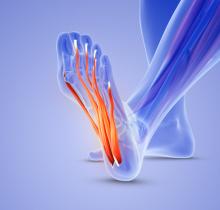
The fascia’s attachment point is at the heel and where classic stabbing pain often shows up, especially in the morning. But plantar fascia is a broad band that runs from the heel to the base of the toes and the whole thing can get set on fire. Yes, many refer to it as “walking on broken glass.”
So “heel pain” is misleading shorthand, it undersells how much of the foot is actually involved in this heinous condition, and it’s partly why so many don’t connect midfoot and arch pain to PF.
I looked at the numbers and it’s not rare. A huge number of people are quietly living with it, languishing through like I’ve been for weeks, while still parenting, working, and showing up because there’s no alternative unless you want to be bedridden, which isn’t an option for most of us. And especially when you’re moving from one house to another.
One of my good friends, a nurse, has suffered greatly with it and said, “Jill, I thought my life as I knew it was over.”
Early on, I saw two podiatrists. What a colossal waste of time.
“Yes, you have plantar fasciitis and I recommend steroids.” There’s absolutely no way I was doing steroids (they pushed ‘em hard) and the only other suggestions they had were everything I’d read online: ice, stretching, compression, night splints, orthotics. Run of the mill stuff that I knew wasn’t going to get at the root cause.
I wanted to know how and why this happened and these flimsy recommendations only managed the pain, and not that effectively, I might add. I needed a solution. Yesterday.
(Below is a list of what’s helped me get my life back.)
A huge toll
Yes, I had help with my move. But I wasn’t going to sit in a chair and give orders and I know that the physicality of staging, cleaning, packing, moving, and settling into a new place didn’t help matters. I look back now and think…how did I get through this summer? I can tell you, it was by the grace of God.
I was managing the pain as best I could with natural compounds. But there were times when I had to take Advil…there was no other option.
And ice. And stretching. And taking breaks and naps, which isn’t like me…I’m not a napper.
I did feel that my world was closing in on me. Some despair set in. I was still doing life, but my flag was at half mast and I felt my life force getting drained out of me.
No one wants to walk on broken glass. And once your feet are compromised long enough, the knees, hips, and lower back can become compromised. I was losing some balance. My hips hurt. And my nervous system was jacked from managing the pain and wondering what my future held.
Let me say that I have a newfound respect and compassion for those living with any kind of chronic pain…I just…I don’t know how they do it. That said, feet are our foundation and chronic, debilitating feet pain (plural) is an altogether unique misery. EVERYTHING is difficult.
There have been some decent, relatively pain-free days. But the ups and downs made it difficult to plan anything. Yes, my daughter and I traveled and I managed, but there were times when I got very weak and even nauseous.
I rejected the motorized wheelchair at the museum that my sweet girl encouraged me to scoot around in—I just couldn’t go there.
The estrogen connection
There’s a reason that rates of PF increase sharply in midlife women with no triggering injury.
Estrogen plays a significant role in connective tissue quality and indeed, plantar fascia is dense collagenous tissue. So loss of estrogen can mean that this tissue becomes compromised.
Before I continue, I don’t think this explains things for me entirely. I turn 57 next week and went through menopause at 46 and nothing remotely close to this agony has reared its ugly head. I guess anything is possible, but I don’t think it’s exclusively a case of “loss of estrogen.” And even if it were, I ain’t doing any kind of estrogen replacement, including the topical or transdermal estrogen applied directly to the heel/foot that some have tried. Besides, the evidence for foot-specific delivery is thin.
As estrogen drops, collagen can become stiffer and less resilient and tissue hydration can decrease, which reduces the fascia’s ability to absorb the repetitive load of walking and standing.
Loss of estrogen is also linked to changes in fat pad thickness under the heel, which shifts mechanical load onto the fascia itself. Additionally, less circulating estrogen can prolong low-grade inflammation and slow tissue repair, making PF flares more persistent and recovery slower than in premenopausal women. This is part of why those standard interventions (stretching, orthotics, night splints) usually underperform.
Where I am today
Again, I don’t think that estrogen, or loss thereof, is my only why. And I don’t think that this lightning bolt hitting me during a move is coincidental because one of the primary reasons for the onset of PF isn’t loss of estrogen (plenty of men get PF), it’s mechanical overload injury.
Things aren’t yet perfect, but I think I’ve found my therapy sweet spot because I’m remarkably better. My energy, mood, focus, and motivation are mostly back and my orthotic sandals now feel like a nice stretch for my feet and dare I say, even a bit like a massage.
What I’ve learned is that there’s no “one way” to reverse this condition. There are people who’ve “tried everything” and who are still suffering, God bless them.
Yes, it’s said to be temporary and in the grand scheme of things, I’ve suffered for a way shorter timeframe than many. I just pray I don’t have another flare/setback.
Here’s what’s working for me:
- Ice. But not just ice, alternating ice and heat (hot water footbath). Aka contrast therapy. I learned this from my doctor friend about a month ago and it made a huge difference.
- Calf stretches in the morning, before getting out of bed, along with rotating my ankles in both directions
- A nightly herbal salve with peppermint, myrrh, frankincense, etc.
- Magnesium oil
- Nighttime compression (not splints)
- Calf raises a few times a day
- Orthopedic sandals and sneakers. This caused me a fair bit of anxiety because style is important to me and I didn’t want to look like a frumpy old lady. My sandals, which I mostly wear at home, are…okay. I do love my “supportive” sneakers, which no one would think are orthopedic at first glance; they’re cool while secretly doing the work of a medical device.
- Vibration: two types/devices, one of which has heat. Things really started to improve when I introduced vibration.
I understand that some of the above is the run of the mill stuff that I mentioned previously. But again, for me, the rubber really hit the road when I introduced heat and vibration.
Vibration helps heal fascia by stimulating fibroblasts that can reorganize collagen. It also increases blood flow and clears inflammatory faster than rest alone. It literally breaks up adhesions and can reduce tension pulling on the injured fascia.
Ice helps to control acute inflammation and numbs pain, but heat increases blood flow and loosens stiff, contracted tissue. Doing ice alone can keep circulation suppressed long-term, which can slow the delivery of nutrients needed for repair. Contrast therapy creates a pumping effect and helps to flush inflammatory byproducts while still bringing in fresh circulation.
Go look at all the mainstream advice about managing PF and you’ll rarely see any mention of contrast therapy. Sigh.
I wrote this post because if you’ve ever felt like you were failing at life while it looked fine from the outside, you’re not broken and you’re not alone. That’s the whole premise I’ve built my health coaching practice on…the body doesn’t fail people randomly, and neither do people fail themselves randomly.
There’s always a reason, and always a way back.
Comments
Been there, done this 3 times
Been there, done this 3 times over 15 years and yes alternating heat & cold with epsom salts foot baths is not mentioned anywhere! But also, Castor Oil packs following heat are magical. I also highly recommend continual gentle stretching. PEMF is also very powerful for increasing circulation directly to the feet to promote healing. It really is debilitating and yet recovery is faster with regular attention to stretching, heat, ice, massage and castor oil and PEMF. Thanks Jill for sharing your journey.
Tying connective tissue
Tying connective tissue problems to estrogen loss is a new concept for me. What I developed ~15 years after full menopause was Achilles tendonitis, another painful connective tissue problem. I agree with the mechanical overload explanation. Going up and down on tiptoes is one trigger for this.
Add comment