
Biohacking: Health Strategy or Distraction?
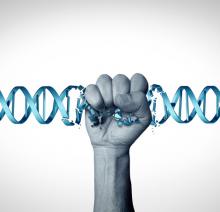
There’s a version of “health optimization” that can look impressive at first glance. You know, the gear, gadgets, and persuasive language. And golly, it sure does photograph well.
An entire industry has sprung up around it and the number of conferences and influencers promoting it is certainly growing.
Everyone loves a “hack,” right? We all want a workaround or clever shortcut that saves time and solves a problem. But what happens when hacks meet chronic illness?
In short, the optimization culture of biohacking runs on promises of longevity and peak performance. This includes promises of a body that won’t age like everyone else’s. But for those with chronic health conditions who view it as a “shortcut to healing,” it rarely delivers a reckoning with why we’re struggling in the first place.
These people just want to get well and lead a normal life—they’re not usually preoccupied with “I want to live to be 160 years old.”
A CGM (continuous glucose monitor) can’t tell you why you have thyroid antibodies (Hashimoto’s) and cold plunging can’t resolve the Epstein-Barr reactivation driving your fatigue. And red light therapy can’t fix a digestive system that’s been dysfunctional for a decade. (See story below, including a blunt and “controversial” (it shouldn’t be controversial) perspective from a close friend and colleague.)
I’m not trying to be a pessimist—these are just realities. The promise of biohacking is that technology can substitute for looking under the hood and for the chronically ill person who has spent two years optimizing the wrong variables, that promise can have a huge cost.
The aesthetic of health
Biohacking isn’t all about hacking chronic illness. It’s also about the fear of chronic illness.
This industry isn’t being churned out from people who are sick and desperate—it’s largely coming from “influencers” who are healthy, wealthy, ambitious, and terrified of losing their edge.
So they experiment on themselves, chase metrics, and quantify everything—they track every biomarker of their sleep, wear CGMs despite having no metabolic dysfunction, and over-test with rounds and rounds of labs. They cold plunge (which is nothing short of horrible if your nervous system is in survival mode), take off-label drugs like Rapamycin, do blood flow restriction training, float for “sensory deprivation,” and take 47 supplements.
I guess some of those are the more “advanced strategies” and for the record, I can get behind things like EMF mitigation (I’m pretty strict about this at my house), morning sunlight exposure, and microbiome testing (which is included in all of my clients’ programs). And yes, I take NAD.
Obsessing about all of this looks and feels like “work.” It produces data, which feels productive, but it’s not the real work. In other words, optimizing the rough edges of a broken system isn’t the same as fixing the system.
I’ve worked with chronically ill people with multiple autoimmune conditions, including the compromised digestive system and hormonal chaos that accompanies autoimmunity, and I’ve never once had a client heal themselves because they added red light therapy to a gut that’s been on fire for a decade. And I’ve never seen someone’s Hashimoto’s go into remission because they started mouth taping.
The people who get well do so because they find the root drivers, methodically, thoroughly, and without shortcuts. It’s not always pretty and it usually doesn’t have gear. Yes, it requires labs, pattern recognition (which I’m really good at, if I do say so myself), and the willingness to do the real work consistently over time. There’s no shortcut.
The distraction problem
Biohacking culture pulls attention away from the work that moves the needle—it’s not necessarily “optimization” and can easily become avoidance. When a woman with severe hormonal dysregulation is tracking glucose variability but hasn’t looked at her cortisol distribution or her estrogen metabolism, she’s optimizing a variable that may not be the primary problem.
There’s no shortage of health information—that’s not the issue. The problem is the format it’s being delivered in and biohacking content is designed to be shareable, stackable, and impressive. Root cause work is rarely any of those things.
And then there’s the money
Look, full on biohacking is expensive. The complete Bryan Johnson stack runs upwards of tens of thousands of dollars a year. (See end of post for recent news about Bryan.)
The message this implicitly sends is that health optimization requires resources. The more you spend, the more serious you are about your health, which is a lie. And it’s a particularly cruel lie for someone who’s sick and scared and doesn’t know where to start.
Just a red light panel, PEMF mat, hyperbaric chamber, peptide protocol, and multiple rounds of labs is enough to bankrupt you before it could ever get around to healing you.
What those with chronic illness need is someone to help them look at the whole picture, uncover where the system broke down, and help rebuild. Yes, it requires time, financial investment, attention, and willingness, but the gear is optional.
What real health optimization looks like
It’s not worthy of a photo shoot and involves looking at things you might not want to see, like how your immune system is behaving, what your gut is doing, whether your hormones are being made and metabolized properly, and what your genetic variants are doing under stress. It involves addressing those findings in a particular order (I call it sequencing), without skipping ahead to the “fun stuff.”
It requires patience and it’s not about a 30-day sprint. It happens over weeks and months of consistent, targeted work.
It requires being willing to sit with complexity instead of reaching for a hack. That’s the part biohacking culture can’t sell you, because it doesn’t feel like “a product.”
The biohacking industry will keep growing and the influencers will keep posting. The gear will keep getting more sophisticated and more expensive and the before-and-after photos will keep performing well on Instagram.
I understand the appeal. It feels productive and cutting edge. But it’s for people with resources and a short attention span who want to engineer their way around the actual work. In my opinion, it’s not a sustainable path, it’s a detour. No, there are no guarantees in life and I never make promises to anyone, but I’ll be over here doing health histories, asking the right questions, sequencing a plan, and working closely with my clients around sustainable implementation.
What’s going on with Bryan Johnson?
Then there’s Bryan—the most famous biohacker alive, the man who’s spent millions engineering his way out of death. About a month ago, he “sent shockwaves” through the natural health community and announced he’s been diagnosed with autoimmune gastritis, a chronic, incurable condition in which his immune system is attacking his own stomach lining.
He claims that it’s been driving iron deficiency that refused to respond to supplementation for years and he also has autoimmune thyroid disease that’s “similar to Hashimoto’s.”
In other words, he has MAS (multiple autoimmune syndrome), the very category of dysfunction that no CGM, no plasma exchange or young blood transfusion, no cold plunge, no longevity protocol can resolve. His body has been sending signals for years and his “stack” didn’t catch it. The man whose entire brand is “I will not let my body fail me” has a body that has been quietly failing him.
I’m not incorporating this story as “I told you so” or some kind of schadenfreude. It’s that the gut and thyroid don’t fail in isolation and $2 million a year and 30 doctors, all chasing HRV, VO2 max, and inflammatory markers—and seemingly, not one of them asked why Bryan’s immune system stopped recognizing his own tissue.
This is the whole argument against the biohacking model of health. It optimizes what’s measurable and ignores what’s foundational. And it took the most measured man on the planet getting blindsided by his own diagnosis to make the point for me.
I copied and pasted the quote below and didn’t note the author. Several similar iterations are floating around out there.
I don’t care to live to be 160. I just want to fully participate in life.
“Most people assume that living longer is the goal. But what if the more important question is: How long will you live well?
“That’s the difference between lifespan and healthspan. Lifespan is how many years you live. Healthspan is how many of those years you remain vibrant, independent, mentally sharp, physically capable, and able to fully participate in life.”
 In closing, a close friend and colleague put it bluntly and she’s not wrong. >>>
* * *
If you’d like to explore working with me as your private health and nutrition coach, you can go here to schedule a Jumpstart session. I’d love to connect and discuss the possibilites with you.
Add comment