
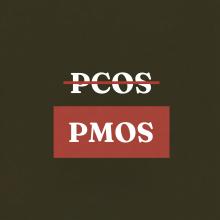
At Long Last: PCOS is Now PMOS
Polycystic ovary syndrome (PCOS) is a largely underdiagnosed condition that affects up to 10-13 percent of women. It’s said to be the most common cause of infertility and can also include symptoms like high cortisol, irregular or absent cycles, acne, weight loss resistance, systemic inflammation, hair loss (the androgenic pattern), and excess hair growth (in rogue places, like the belly, arms, thighs, breasts, chin, or upper lip).
Historically, it’s a condition that “isn’t fully understood” by the medical community, which has been pretty apparent because so many doctors who’ve suspected PCOS have done an ultrasound to determine if a woman has cysts (“the pearl necklace”). And if she doesn’t, they’ve too often made the determination that PCOS isn’t the cause of her high cortisol, irregular or absent cycles, acne, weight loss resistance, systemic inflammation, hair loss, and excess hair growth.
On the other hand, many doctors in the functional medicine community have been sounding the horn on the “absence of cysts” phenomenon and how there are multiple patterns of PCOS, some of which don’t require cysts for a diagnosis. In other words, just because you don’t have cysts doesn’t mean you don’t have PCOS.
But the C stands for cystic, so how does this work? And…for those women who have them, are they really cysts? Keep reading.
I’ve been harping on this disparity for years. Some of you reading this who’ve been clients and course participants will remember me saying, “Aarrgh, they need to change the name of this condition!”
It’s not just “the name.” It’s the ignorance and miseducation that has left so many women without a proper diagnosis, much less the right care for this condition that could leave her infertile, insulin resistant, overweight, and nearly bald.
No, I don’t diagnose. But these cases can be very obvious to me, largely because I’ve worked in the insulin/blood sugar mismanagement and androgenic alopecia space for well over a decade.
This post is about the critical need for the name change and you can go here for my prior posts about the condition:
PCOS is finally getting renamed
As of May 2026, after more than a decade of debate and input from over 22,000 patients and providers and an international panel of clinicians, researchers, and patient advocates, “polycystic ovary syndrome” is officially polyendocrine metabolic ovarian syndrome, or PMOS.
This change has been such a long time coming. And it’s facilitating a completely different way of understanding the collection of symptoms known as “PCOS.”
Why “polycystic ovary syndrome” was always wrong
Words matter and diagnoses matter and what many providers still don’t understand is that the “cysts” that gave PCOS its name aren’t true, pathological cysts. What shows up on an ultrasound are immature antral follicles—eggs that started developing and stalled. That’s a downstream symptom, not the root cause. But because the name put “ovaries and cysts” front and center, an entire generation of patients and providers got stuck looking in the wrong place.
I’ve said for a very long time that PCOS was never primarily an ovarian problem, it’s a whole-body hormonal and metabolic condition that happens to show up in the ovaries.
What PMOS reflects
The new name hones in on what’s really driving this condition for most women:
- Insulin resistance: often present even in people who aren’t overweight, and a major driver of the hormonal cascade that follows
- Androgen excess: elevated testosterone and DHEA, responsible for symptoms like acne, hair thinning, and irregular cycles
- Metabolic risk: higher long-term risk of impaired glucose tolerance, gestational diabetes, dyslipidemia, and cardiovascular disease
- Ovarian involvement: still part of the picture, just not the whole picture
This is the framing that functional and integrative medicine has used for years: treat the metabolic and endocrine root and the downstream symptoms—irregular cycles, fertility struggles, skin and hair changes—improve as a result. And now mainstream medicine is finally catching up.
Practical implications
Here are a few things to know if you have this condition (under either name):
- Nothing about your diagnosis changes. If you were diagnosed with PCOS, know that PMOS isn’t a new condition—it’s a more accurate name.
- Your paperwork will lag behind the science. Insurance forms, lab requisitions, and prescriptions will likely still say PCOS for a while. Rollout across clinical guidelines is expected to take up to three years.
- This is a chance to widen the conversation with your provider. If your care thus far has focused mainly on your cycle or ovaries, the new name is a good opening to ask about the metabolic side—blood sugar, insulin, cardiovascular risk—especially if these haven’t been addressed.
The bigger point
Again, names and labels matter because they shape how conditions get treated—and misdiagnosed. A cyst-centric name kept the focus narrow for decades and that narrowness had huge consequences: delayed diagnoses, dismissed symptoms, and treatment plans that never got to the actual root of what was going on. I’m not a medical provider, but I’ve worked with so many of these women who’ve been cast aside and made to feel crazy.
The new name won’t fix this fallout overnight, but it’s a meaningful shift toward treating this condition the way it should’ve been treated all along: as a metabolic and hormonal condition that deserves a whole-body approach, not just a prescription aimed at symptoms.
If you’re navigating PCOS/PMOS and want to understand what’s driving your symptoms—not just manage them—feel free to schedule a Jumpstart session with me.
Here are my prior articles again:
(I know, they still say PCOS. There’s a new intro sentence on each of these posts.)
Add comment