
Why Your Ferritin Still Won't Budge
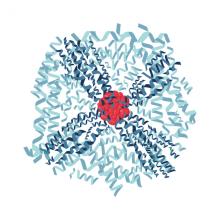
Years ago, ferritin, which is our iron storage protein, was explained to me by a functional medicine doctor like this:
Iron is the merchandise in the front of the store. Ferritin is what’s in the back storage room.
Unfortunately, most doctors only check what’s on the shelves.
I’ve long known about the importance of ferritin, given that in the functional medicine world, it’s often tested alongside a full thyroid panel. Why? Because low ferritin can impair thyroid hormone conversion (T4 to T3) and worsen hypothyroid symptoms—even when TSH is normal.
Later, when my alopecia went nuclear, I learned that hair follicles are highly metabolically active and sensitive to iron status and low ferritin (even without outright anemia) can worsen or trigger shedding. It’s a prioritization/rationing issue—when iron is low, it first directs available iron to essential functions (red blood cells, oxygen transport, organs) and deprioritizes non-essential tissue like hair follicles.
In another prior post, I walked through the HCl (hydrochloric acid)–H. pylori–ferritin triad. I wrote it with the alopecia community in mind, but it can apply to anyone and I’ve shared it with countless clients who don’t struggle with hair loss.
The short version is that:
- Stomach acid is essential for absorbing iron (poor iron absorption often shows up as low ferritin on labs)
- Low HCl is extremely common in those with autoimmune conditions
- H. pylori makes the whole picture worse (not that everyone who has low HCl and ferritin has H. pylori).
So let’s say you did the work. You raised your HCl levels. You tested for and possibly treated H. pylori. You’re eating liver, taking liver supplements, taking iron bisglycinate. And your ferritin is still sitting at 7. Or 22. Or whatever number your provider waves off as “fine” while you’re still losing hair and running on fumes.
You can test your HCl levels home. As I said in my HCl–H. pylori–ferritin post, I often recommend a full HCl challenge with a pepsin/betaine supplement (see Appendix G on page 337 in our Essential Thyroid Cookbook for instructions) but a baking soda challenge can often work just as well. Children can even do it. Click on the link in this paragraph for instructions.
The body has an iron gatekeeper
There’s a layer above absorption that’s rarely addressed and it explains why doing everything right may still not be enough.
Hepcidin is a hormone made by the liver and its job is to control how much iron is allowed to move from storage into your bloodstream. When hepcidin is high, iron gets locked away—it can’t be released from storage and can’t be absorbed efficiently from your gut, no matter how much you’re taking or how sufficient your stomach acid is.
This is the missing piece for a lot of people who’ve already fixed their HCl and cleared H. pylori and still can’t move the needle. You may have solved the absorption problem but if hepcidin is elevated, your body is actively keeping iron on lockdown.
Here’s what drives hepcidin:
Systemic inflammation. This is a big one, especially if you have autoimmunity. Hepcidin increases in response to inflammatory signaling and if your immune system is chronically activated, hepcidin can be too because the system is protecting itself. Pathogens need iron to survive, so the body hides it during a threat. The problem is that with a chronic autoimmune condition, that “threat” signal may not turn off.
Infection. This connects directly back to the prior post. H. pylori (and other infections) drive hepcidin through the same inflammatory pathway and it’s part of the reason why that infection can tank ferritin even after you’ve addressed HCl.
Heavy exercise. Intense training acutely raises hepcidin, which is why endurance athletes often struggle with iron status. This may be less relevant for most people, but it’s worth noting.
There’s no standard lab test for hepcidin and most providers won’t check it anyway. But if your ferritin stays low despite adequate absorption and the right supports, inflammation or infection could be a reasonable explanation.
The delivery problem
Even after iron makes it into storage, it still has to get snatched up and delivered where it’s needed. That delivery process depends on ceruloplasmin, a copper-carrying protein.
Here’s another analogy: ferritin is the storage tank, transferrin is the delivery truck, and ceruloplasmin is what loads the cargo onto the truck. If ceruloplasmin activity is low, iron can sit in the tank—you can be “iron replete” on paper and still functionally iron-starved.
Low ceruloplasmin is more common than most practitioners realize and it often goes untested. It can be a result of low copper intake, but also from liver stress, chronic inflammation, or high-dose zinc supplementation without corresponding copper. Zinc and copper compete for absorption and zinc-heavy protocols are everywhere.
Ceruloplasmin is a standard lab, not esoteric, so if you’ve been supplementing with iron with lackluster results, it’s worth asking your provider to run it. The functional range is generally 25–45 mg/dL, with some practitioners wanting to see it toward the higher end of that range.
Putting it all together
None of this replaces the HCl and possible H. pylori work.
- Low HCl limits how much iron you can absorb in the first place.
- Infection (like H. pylori) compounds that, and also drives hepcidin up, locking away what iron you do have.
- Chronic inflammation keeps hepcidin elevated even after the infection has resolved, so iron stays locked away.
- Low ceruloplasmin means that even iron sitting in storage can’t get loaded into circulation.
If your ferritin is still languishing and you only normalize your HCl levels and clear the infection but never address the inflammation or the copper piece, you can end up doing everything “right” and still watching your ferritin refuse to move, which can have a major—and unwanted—impact on your thyroid and hair follicle status.
What you can do
Address the inflammation upstream. This is the core work. Ferritin optimization is downstream of maintaining gut integrity, clearing infections, reducing toxic body burden, balancing hormones, etc.
Test ceruloplasmin. If it’s low, copper repletion through diet (beef liver is one of the richest sources) or targeted supplementation may help. Copper and zinc need to be in some balance, although I think that this has been overstated, as in “copper as the boogeyman.”
Don’t over-supplement zinc without copper. High-dose zinc without copper is a common, avoidable way to suppress ceruloplasmin and stall your iron status.
Consider lactoferrin. This is an iron-binding protein found naturally in breast milk, saliva, and colostrum and studies show supplemental lactoferrin can raise ferritin effectively—in some cases more effectively than standard iron supplements. It works through a different pathway than regular iron and may let iron get absorbed even if hepcidin is working against you.
Again, everything from the prior post still applies. Absorption is only part of the story because iron doesn’t exist in isolation—it’s part of a system and treating the number without treating the terrain will only get you so far.
Hepcidin-driven iron restriction and ceruloplasmin insufficiency are two additional mechanisms that rarely get discussed, but they’re very relevant to anyone with autoimmunity or chronic illness, hair loss or hypothyroidism or not.
Add comment