
LED Lighting: The Next Asbestos?
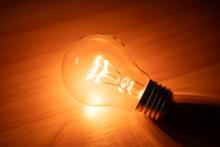
As of this writing, the bulbs I love and use in my own home and that many of my clients use are on sale. I’m an affiliate and you get 10% off during non-sale times, year ‘round, but there’s a 15% off sale through December 1, 2026. When you use my link, it will say that you get 10% off, but keep going to the Shop…the 15% off will be automatically applied.
This article is an amalgamation of the dense sources you’ll find at the end of this post.
We think of light as something we see by, but your body treats it more like a nutrient. Unlike our ancestors and agrarian societies of yore, most of us spend our days getting bathed in a substandard—and harmful—version of it.
Glen Jeffery, a neuroscience professor at University College London, has spent years studying how different wavelengths of light affect the body. On the Huberman Lab podcast, he was asked about how much blue-heavy light, like LED, people now live under, especially children. He answered that it’s an issue on the same level as asbestos.
And Jeffery isn’t the only expert to make this claim. Some even say LEDs are “the next secondhand smoke.”
New Scientist recently ran a feature headlined “The shock revelation that light bulbs are wrecking your metabolism” and it described modern interiors as essentially depriving people of a nutrient. This should give everyone pause.
Yes, the asbestos comparison sounds extreme until you look at how much our light has changed. We spend a staggering 80–90 percent of our time indoors and indoor light differs from sunlight in substantive ways: brightness, timing, and wavelengths.
Part of the reason is a single regulatory decision about what’s considered “light.”
How the incandescent bulb got banned
Bulb efficiency is measured in lumens per watt. Using a formula from 1924, a lumen measures how bright light looks to the eye—green and yellow count the most, blue and deep red count for very little, and violet, ultraviolet, and infrared barely count at all.
The light-sensing cells that set the body clock weren’t discovered until decades after that 1924 formula was adopted. So we designed indoor lighting around what our eyes can see and how little electricity it uses and overlooked the wavelengths the rest of the body responds to.
By that standard, an incandescent bulb “wastes” most of its energy and an LED is “nearly perfect.” A 2022 federal rule set a minimum of 45 lumens per watt, which banned the manufacture and sale of standard household incandescents. A second rule, taking effect in July 2028, raises the minimum to more than 120 lumens per watt. That phases out compact fluorescents as well and leaves LEDs as essentially the only option for standard household bulbs.
Remaining stock could disappear with little notice. If you want these bulbs in your home, it’s wise to stock up on enough for a few years. I have an entire area of my basement stacked with incandescents.
Back to the future
Especially with the recent onslaught of information about the dangers of LEDs, many are returning to the incandescent bulb. This is how lighting is meant to be. You’ll immediately notice a change in the atmosphere of your home—it will emit a pleasant, warm light and many have said that their mood is remarkably better.
I’m sorry, but to me, LEDs are to lighting what paper is to straws: a swap sold as “saving the planet” that leaves us with something way worse. I’m not going to feel guilty about a few incandescent bulbs while the country builds data centers that use as much electricity as whole cities. Know what I’m sayin’?
Sunlight: more than just Vitamin D
A 20-year study of nearly 30,000 Swedish women found that those who avoided the sun had a higher risk of dying during the study, largely from heart disease. In the UK, almost 89,000 people wore light sensors for a week and those with brighter days and darker nights were less likely to die over the following eight years.
Vitamin D is only part of it. When volunteers were exposed to UVA light, which doesn’t produce Vitamin D, their blood vessels relaxed and blood pressure dropped because sunlight releases nitric oxide stored in the skin. A meta-analysis found that an hour or more a day in summer sun was linked to a 16 percent lower risk of breast cancer.
I’ve been a sun worshipper for over 40 years and while I’d never intentionally burn myself, this 57-year-old has no intentions of stopping.
Before the mostly ridiculous sunscreen campaigns we’ve been beaten over the head with for decades, the medical community took this seriously. In the early 1900s, sunbathing was used to treat tuberculosis and other conditions that had no other cure.
What LEDs leave out
Sunlight delivers a smooth, full spectrum: some blue, plenty of red, and a large amount of infrared we can’t see. Incandescent bulbs produce something similar because both come from a glowing heat source—their output keeps rising through the red and continues well into the infrared.
Standard LEDs emit a sharp spike of blue around 450 nanometers, a broad hump of yellow, and almost nothing beyond about 700 nanometers, where red ends and infrared begins.
This difference affects us in two profound ways.
Blue light at night disrupts your circadian clock. I’ve been harping on this for years and telling my clients, friends, family, and Sleep Reset Blueprint participants—anyone who will listen—to get off the screens at night.
Melatonin is a neurohormone that tells your body it’s night. Your pineal gland releases it as daylight fades, levels rise through the evening, and it peaks in the middle of the night. In other words, it helps you fall asleep and stay asleep. It’s also one of the body’s most powerful antioxidants and supports the repair work your cells do overnight. Light is the main signal that shuts it off and blue light does this in spades—it holds melatonin down at the very time it should be increasing.
The cells in your eyes that set your circadian rhythm respond most strongly to blue and when researchers measured 52 household bulbs, cool white LEDs and compact fluorescents were each estimated to suppress melatonin by about 12 percent, warm white LEDs by 3.6 percent, and incandescents by 1.5 percent.
The American Medical Association warned in 2016 that blue-rich LED streetlights suppress melatonin at least five times more than the lamps they replaced and advised cities to use warmer, shielded, dimmable lights.
The LED-incandescent gap shows up clearly—a study found that homes lit with energy-efficient bulbs had nearly double the clock-disrupting light in the evening compared with homes still using incandescents. Nearly half of all homes were bright enough at night to cut melatonin by a whopping 50 percent.
In 2023, 248 circadian researchers agreed that blue-enriched LEDs disrupt circadian rhythm, that this raises the risk of breast cancer, obesity, diabetes, and sleep disorders, and that high-blue bulbs should carry a warning about nighttime use.
You can add to this list: digestive disorders, cardiovascular disease, depression, anxiety, compromised immune function, hormonal imbalances, and cognitive decline.
The risk population isn’t “insomniacs” and those with poor or fragmented sleep. It’s essentially everyone who spends their evenings under modern LED lighting and screens—which is nearly everyone, including the people convinced they sleep “fine.” That’s what makes it insidious and worth acting on because the absence of a sleep issue isn’t evidence you’re not being affected.
If anything, good sleepers are the ones least likely to suspect their lighting is affecting them at all.
The missing infrared affects your cells. Infrared reaches far deeper into the body than ultraviolet, several millimeters to a few centimeters. Jeffery’s lab has shown that blue light around 420–450 nm suppresses mitochondrial activity, while red and near-infrared light around 670–900 nm increases it. Mitochondria produce the energy every cell runs on, so this is a huge deal for metabolism, healing, and aging.
His team also found that light applied to one part of the body changes what happens elsewhere. In one human study, 15 minutes of red light on the back reduced the blood sugar spike from a glucose drink by about 27 percent. In an animal model of Parkinson’s disease, light directed at the abdomen or legs protected the brain. The researchers believe that mitochondria signal one another through the blood.
Animal studies point in the same direction—in a 2025 study, mice exposed to the blue wavelengths that dominate LEDs gained weight rapidly compared with controls. In a 2019 study, fruit flies raised under white LEDs lived half as long as flies kept in darkness. That loss almost disappeared once a yellow filter removed the blue.
What happened when the light was added back
For a study published in 2026, Jeffery’s team ran a simple experiment in a London office lit entirely by LEDs, with windows coated to reflect infrared. They placed ordinary 60-watt incandescent desk lamps around the benches of 11 workers for two weeks and 11 others worked as usual.
Color-contrast vision improved by about 25 percent in every worker near the lamps. Nothing changed in the others. The improvement lasted two months after the lamps were taken away.
They noted that their attempts to recreate the missing spectrum with infrared LEDs had limited success and that the old-fashioned bulb did the job better.
Daylight and blood sugar
If you’ve followed me for any period of time, you know how I get on my soapbox about blood sugar management!
A separate study from Maastricht University tested daylight directly. Thirteen adults with type 2 diabetes, average age 70, spent two 4.5-day stretches working office hours. Once they worked in natural daylight through large windows and once in a windowless room under standard office lighting of about 300 lux. Meals, activity, sleep, and evening light were all kept the same and participants wore blue-blocking glasses outside office hours so stray daylight wouldn’t skew the results.
Under daylight, participants spent more time in the normal glucose range and their blood sugar swung less over 24 hours. They shifted toward burning more fat for fuel, genes that help run the body clock were more active, and the fats often elevated in type 2 diabetes trended down.
Average blood sugar didn’t change—what changed was how steady it stayed. Participants were in range 83 percent of the time under daylight versus 77 percent under artificial light. Less than a week of different light produced a measurable shift.
What to do now
- Switch out as many of your bulbs as you can. If the whole house isn’t feasible, at least use incandescents in rooms you use at night. (Again, as of this writing, they’re 15% off through December 1, 2026.)
- Get outside within an hour of waking, even for ten minutes. Morning light sets your clock for the day.
- Work near a window and take breaks outdoors. Glass and indoor lighting filter out parts of the spectrum.
- In the evening, keep lights warm and dim.
- Keep screens and overhead lights low in the last hour before bed and keep your bedroom dark.
- Spend unfiltered time outside without sunglasses so your eyes get the full spectrum.
Sources
- A Midwestern Doctor. The Hidden Harms of Modern Lighting
- Barrett, E. M. & Jeffery, G. (2026). LED lighting (350–650 nm) undermines human visual performance unless supplemented by wider spectra (400–1500 nm+) like daylight. Scientific Reports, 16, 3061.
- Harmsen, J. F., Habets, I., Biancolin, A. et al. (2026). Natural daylight during office hours improves glucose control and whole-body substrate metabolism. Cell Metabolism, 38(1), 65–81.
- Huberman Lab. Using Red Light to Improve Metabolism & the Harmful Effects of LEDs | Dr. Glen Jeffery
- New Scientist. The shock revelation that light bulbs are wrecking your metabolism
Add comment