
I’ve Lost 15 Lbs and Eat Cinnamon Raisin Toast Every Day
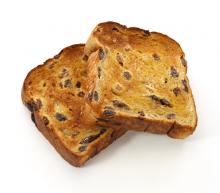
This is a little awkward for someone who’s spent 21 years as a holistic nutrition coach, but I recently lost 15 pounds, which needed to go. It actually may be a little more than 15 pounds at this point.
Hi, my name is Jill and I’m 57. I eat cinnamon raisin toast slathered in butter every morning. (It’s not the only thing I eat for breakfast!)
I’m still losing and expect to be down another pant size soon. And yes, it feels really, really good.
I didn’t follow a protocol, cut a food group, fast for 16 hours, or buy anything new. I just started eating less. That’s it. That’s the secret.
Complexity sells
The health and weight loss industry—and yes, I’m part of it—runs on complexity. Multi-phase resets. Food elimination lists that are three pages long. Tracking (and obsessing over) food intake. Biohacking. Supplement stacks that fill a cabinet. Some would argue that this complexity has its place. But I’d never agree with three pages of foods to eliminate, tracking bites or calories or carbs, blood flow restriction, and enough pills and tinctures to fill a cabinet. Never.
Complexity makes weight loss feel like a code only an “expert” can crack. And somewhere along the way, a lot of women—especially midlife women—embodied a story that goes: I’ve tried everything. Nothing works. My metabolism is broken.
I know that story very well—I’ve heard it from hundreds of women and on some level I’d half believed it about myself. I’d been slowly gaining and didn’t realize how far things had gone. I’m 5’10” and “wear it well,” but I didn’t want to wear it anymore.
So I started eating less and in a pretty short time, my clothes got looser. I can even see the loss in my face.
Metabolism doesn’t “break,” it adapts
Metabolism is responsive—it speeds up and slows down based on food intake (including timing—reasonable timing, not obsessing), how much you move, how much muscle you carry, how well you sleep, and what your hormones are doing. And after years of dieting, it gets very good at conserving energy (fat is an energy source), which is your body doing exactly what it was designed to do.
I don’t believe in dieting and never have.
Yes, there are substantiated factors that make weight harder to downshift:
- An underactive thyroid: Hypothyroidism can ramp metabolism down and it’s grossly underdiagnosed, including Hashimoto’s (autoimmune hypothyroidism).
- Insulin resistance: Blood sugar dysregulation is highly inflammatory and changes how your body stores and releases fat.
- Muscle loss: We lose muscle with age unless we work to keep it. (Admission: I haven’t been getting as much movement as I should.)
- Sleep: Poor sleep drives cravings and blood sugar instability. (I just taught an entire class on this.)
- Yeast: This is one of the single biggest drivers of weight loss resistance. Truly.
- Perimenopause and menopause: Shifting reproductive hormones change where and how we carry weight, but it doesn’t mean that weight gain and weight loss resistance are the gifts that keeps on giving during this time of life.
None of these mean your metabolism is broken. These are levers you can pull and for many women, the simplest lever—how much food is on the plate—is still sitting there, untouched, because we’ve been told it couldn’t possibly be that simple.
Mindset
Nothing dramatic changed for me. I continued eating three meals a day, as I’ve done for many years (no grazing!) and I stopped when I was satisfied instead of full. I’ve never eaten to discomfort, but I’ve been putting the fork down sooner.
Have you heard of hara hachi bu? It’s eating until you’re 80% full. It works.
I cut nothing out and even had ice cream with my daughter a few nights. Just a little of the high quality stuff is perfectly satisfying.
I haven’t felt deprived, which is exactly why things have stuck. And I don’t feel like I need willpower to keep going.
Again, I’m 57 and most people guess I’m 45. Restriction and food fear didn’t get me here.
When “eat less” isn’t the whole answer
I want to be clear here because I know who reads this blog.
If you have an autoimmune condition, unresolved gut issues (including yeast overgrowth), a thyroid that hasn’t been properly tested and supported, hormones that are out of whack, or your sleep is suboptimal, eating less may not be enough on its own—and it shouldn’t be the only thing you try. Sometimes the body genuinely needs support before it can respond and that’s not a willpower problem.
This is the work I do with clients every day—finding out what’s going on underneath so the simple things can start working again.
I can’t count the number of women I’ve worked with over many years who started dropping weight—often in a matter of just a few days—by working on the issues above.
No dieting. No deprivation. No willpower. In many cases, they needed to eat MORE.
Fact: If you’re dieting or under-eating, you can lose weight by giving your body more fuel…the right fuel at the right times. Yes, this is counter to everything the media and the diet industry have beaten us over the head with for decades. Shame on them.
So if you’ve done the basics and nothing is moving, that’s a signal to look deeper—not proof that you’re broken.
[As of this writing, my Gut + Hormone Intensive is opening soon. I only offer it a couple of times a year to a limited number of participants.]
Look, bread isn’t your enemy. Your body isn’t defective. And you don’t need a 20-step protocol to make progress.
Sometimes the answer really is less—less food, less fear, less complexity. And yes, sometimes the answer is to find out what’s getting in the way.
Either way, your metabolism isn’t broken.
Add comment